Comprehending the Manufacturing Process of Light Weight Aluminum Spreading: A Comprehensive Overview
The production procedure of aluminum Casting is complex and detailed. It incorporates numerous strategies that transform liquified light weight aluminum into exact shapes. Each method, from sand Casting to pass away spreading, plays a necessary role in the end product's top quality. Understanding the subtleties of aluminum alloys and melting processes is essential. As one discovers the intricacies of molding and ending up techniques, the significance of quality assurance ends up being noticeable. What aspects absolutely influence the success of this procedure?
The Fundamentals of Light Weight Aluminum Spreading
Light weight aluminum Casting is a pivotal manufacturing process that transforms liquified aluminum right into specific, elaborate forms. This procedure begins with the cautious melting of aluminum ingots or scrap in a heater, where temperatures go beyond 660 levels Celsius. When molten, the aluminum is poured right into pre-designed mold and mildews, which determine the last form of the actors element.
Air conditioning occurs as the aluminum solidifies, allowing it to handle the characteristics of the mold. The top quality of the last item is influenced by aspects such as the pureness of the light weight aluminum, the style of the mold and mildew, and the air conditioning price. After solidification, the molds are gotten rid of to disclose the cast item, which may undergo added ending up processes, such as machining or surface area therapy, to meet specific resistances and visual needs. Generally, light weight aluminum Casting functions as a fundamental technique in the production of different components across markets.
Sorts Of Light Weight Aluminum Casting Processes
The various aluminum Casting processes play an important role in making performance and product quality. Secret techniques consist of sand spreading, which is cost-efficient and versatile; pass away casting, recognized for its precision and speed; and long-term mold and mildew casting, which provides durability and improved surface area finish. Each method has its one-of-a-kind benefits, making them ideal for different applications in the sector.
Sand Casting Method
While numerous Casting techniques exist, sand Casting remains one of the most widely used methods for forming light weight aluminum elements. This procedure includes creating a mold and mildew from sand, which is compressed around a pattern to develop the preferred shape. As soon as the mold and mildew is ready, liquified light weight aluminum is poured into the cavity, where it strengthens and takes on the form of the mold. Sand Casting is specifically valued for its convenience, allowing for the manufacturing of complicated shapes and dimensions. In addition, it is economical for both tiny and huge manufacturing runs. The method is suitable for numerous aluminum alloys, making it a prominent choice in sectors ranging from automobile to aerospace. Its simpleness and flexibility add to its long-lasting popularity in light weight aluminum spreading.
Pass Away Casting Approach
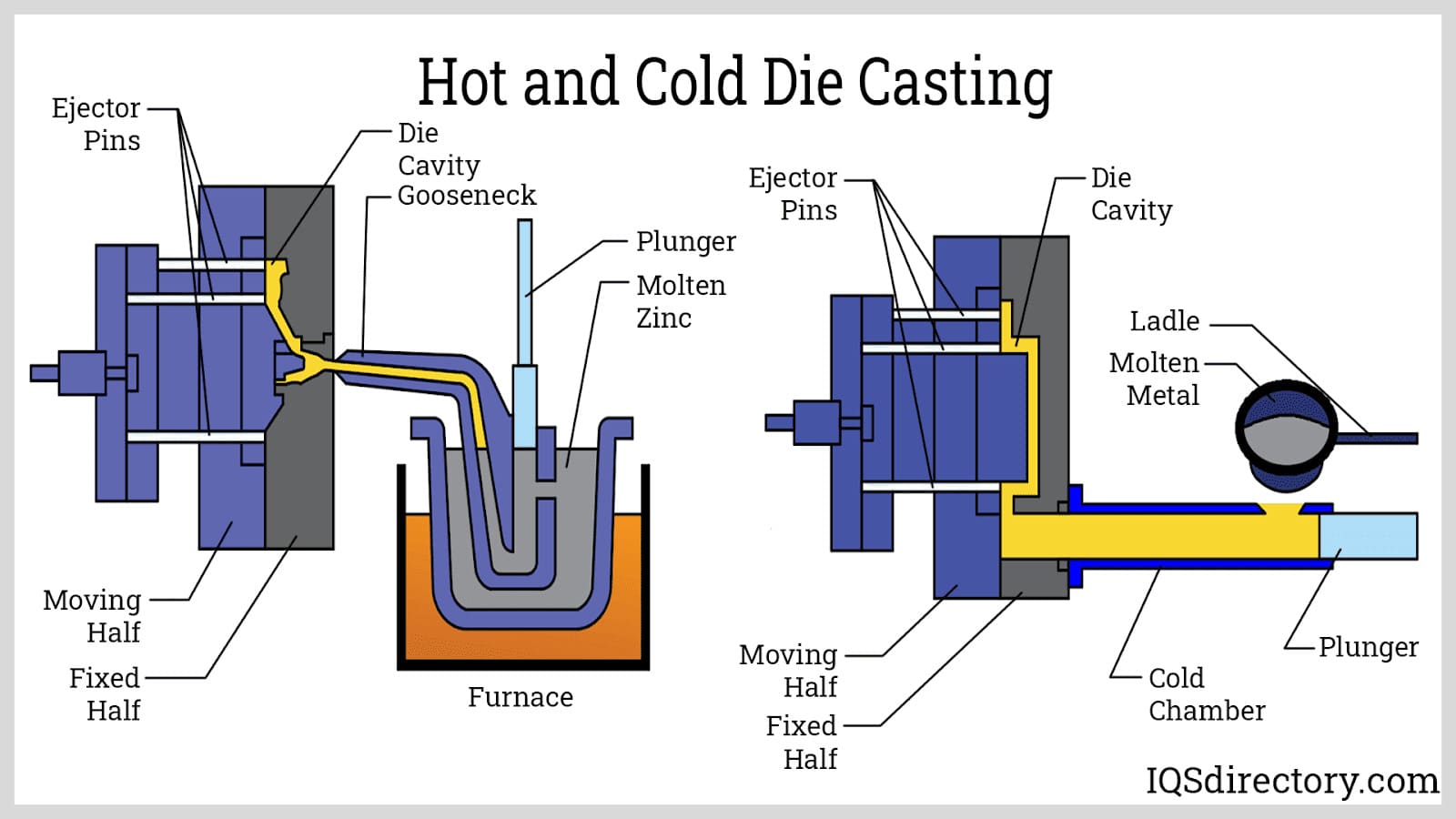
Die Casting represents a very efficient technique for creating light weight aluminum components, identified by its capability to produce intricate forms with excellent dimensional accuracy. This process involves forcing molten light weight aluminum right into a steel mold at high stress, which permits quick manufacturing and marginal waste. There are 2 main sorts of die spreading: warm chamber and cool chamber. Hot chamber die Casting appropriates for low-melting-point alloys, while cool chamber die Casting is ideal for higher melting points, providing flexibility in product option. The die Casting approach not just guarantees smooth surface area finishes however also enables the production of intricate geometries that are hard to attain with other Casting strategies. In general, pass away Casting is crucial for markets calling for high-volume manufacturing of accuracy parts.
Long-term Mold Casting
The Light Weight Aluminum Casting Materials
Aluminum casting relies upon a selection of products to attain the wanted residential or commercial properties and efficiency features of the last product. The main product used is aluminum alloy, which has various components such as silicon, copper, magnesium, and zinc to improve particular qualities like stamina, corrosion resistance, and thermal conductivity. The option of alloy is necessary, as it directly influences the mechanical buildings and casting behavior.
Along with the aluminum itself, other materials play significant functions in the Casting procedure. Sand, used in sand spreading, offers the mold framework, while ceramic products can be used for complicated forms in investment spreading. Additionally, ingredients like fluxes might be incorporated to boost fluidity and lower oxidation throughout the Casting procedure. Each of these materials is selected based on the requirements of the last item, making sure suitable efficiency and toughness in its intended application.
The Light Weight Aluminum Melting Process
Before casting, the aluminum must go through a melting procedure to transform it from solid to liquid kind. This process generally happens in a furnace, where the light weight aluminum is heated to its melting factor, about 660 levels Celsius (1220 levels Fahrenheit) Various kinds of furnaces might be utilized, consisting of induction, resistance, and gas-fired heaters, each offering different benefits regarding effectiveness and environmental influence.
Molding Strategies in Light Weight Aluminum Spreading
Molding methods play see this site an important function in the aluminum Casting procedure, influencing both the top quality and efficiency of the end product. The sand molding process and various die Casting techniques are 2 predominant methods utilized in the sector. Each technique offers distinctive advantages and is fit for different applications, influencing the overall manufacturing end result.
Sand Molding Process
While different techniques exist for forming aluminum castings, the sand molding procedure remains among one of the most widely used methods in the industry. This method employs a mixture of clay, water, and sand to produce molds that can endure the heats of molten aluminum. The procedure begins with producing a pattern, usually made from steel or plastic, which is after that pressed into the sand mixture to develop the mold tooth cavity. Once the pattern is gotten rid of, the mold and mildew is set up, and molten aluminum is poured into the cavity. After cooling down, the sand is broken away, exposing the finished casting. Sand molding provides adaptability in style and is cost-efficient, making it ideal for both big and little production runs.
Pass Away Casting Methods
Die casting methods stand for one more significant technique in aluminum spreading, offering distinct advantages over conventional sand molding. This process includes requiring molten light weight aluminum into a steel mold under high stress, enabling the production of complicated shapes with limited resistances. There are 2 key kinds of die spreading: warm chamber and cold chamber. In hot chamber die casting, the shot system is submerged in liquified metal, ideal for low-melting-point alloys. Alternatively, chilly chamber die Casting requires the metal to be thawed in a separate heater and after that infused right into the mold, making it suitable for greater melting-point alloys. Both approaches boost production efficiency, lower waste, and enhance surface area coatings, making die casting a recommended option for many applications in the manufacturing sector.
Finishing Processes for Light Weight Aluminum Castings
Finishing procedures are necessary to boost the look and performance of aluminum spreadings, guaranteeing they satisfy the certain requirements of various applications. These procedures consist of cleaning, surface area treatment, and coating. Cleaning up removes any residual materials, such as oils or sand, from the Casting surface area, preparing it for additional therapy.
Surface area treatment approaches, such as shot blowing up or fining sand, aid accomplish an uniform structure and boost attachment for coverings - Aluminum Casting Manufacturer. Plating is a prominent covering technique that enhances rust resistance and gives an aesthetically pleasing finish
Furthermore, powder finish can offer sturdy shade choices, while painting enables for customization in look. Machining may also be used to accomplish specific dimensions or additional surface area coatings. Each completing process plays a crucial function in enhancing both the aesthetic and practical elements of light weight aluminum spreadings, contributing to their total top quality and durability in numerous industrial applications.
Quality Assurance in Aluminum Spreading
Quality assurance in aluminum Casting is a critical facet of the production procedure that ensures the end products satisfy the required requirements and specifications. This procedure involves systematic examinations and tests throughout various phases of production. Originally, resources are assessed for chemical structure and contaminations to validate they view publisher site satisfy industry norms. During casting, parameters such as stress, temperature level, and air conditioning rates are closely checked to stop flaws like porosity or imbalance.
Post-casting examinations consist of non-destructive screening methods, such as X-ray or ultrasonic examinations, to spot interior imperfections. In addition, dimensional checks analyze the precision of the actors elements versus style requirements. The implementation of quality monitoring systems helps in documenting and tracking these procedures, permitting for constant renovation. Aluminum Casting Manufacturer. By adhering to rigorous high quality control measures, manufacturers can enhance product reliability and performance, ultimately satisfying consumer requirements and decreasing production prices check that connected with rework or scrap
Often Asked Questions
What Are the Ecological Impacts of Aluminum Spreading?
The ecological influences of light weight aluminum Casting include power consumption, greenhouse gas emissions, and waste generation. In addition, the process can result in water air pollution and habitat damage, highlighting the demand for sustainable methods in the industry.
Exactly How Does Aluminum Casting Compare to Various Other Steel Casting Processes?
Aluminum casting offers benefits such as lower melting temperature levels and lighter weights compared to other steel Casting procedures. This results in lowered energy intake and higher layout adaptability, making it a preferred selection for different applications.
What Security Measures Are Necessary Throughout Light Weight Aluminum Spreading?
Precaution during light weight aluminum Casting include putting on safety equipment, making sure appropriate air flow, maintaining devices routinely, carrying out fire safety procedures, and offering training on dealing with molten steel to minimize mishaps and health and wellness risks in the workplace.
Just How Can I Recycle Aluminum Castings Efficiently?
Reusing aluminum castings successfully includes gathering scrap, cleansing impurities, and thawing the light weight aluminum (Aluminum Casting Manufacturer). The procedure ought to assure correct splitting up of various alloys to keep quality, followed by casting right into brand-new forms for reuse in manufacturing
What Are Usual Flaws in Aluminum Castings and Their Reasons?
Typical defects in light weight aluminum spreadings consist of porosity, shrinking, and imbalance. These issues frequently develop from poor melting temperature levels, improper mold and mildew design, or not enough cooling prices, impacting the end product's toughness and integrity.
Each technique, from sand Casting to die casting, plays a vital duty in the last item's quality. Trick methods include sand casting, which is versatile and affordable; die spreading, understood for its precision and rate; and long-term mold spreading, which offers resilience and boosted surface coating. While many Casting approaches exist, sand Casting continues to be one of the most extensively utilized methods for forming light weight aluminum components. The die Casting approach not just ensures smooth surface area finishes but likewise enables the production of complex geometries that are difficult to attain with various other Casting methods. Sand, utilized in sand casting, gives the mold and mildew framework, while ceramic products can be utilized for complex shapes in investment spreading.